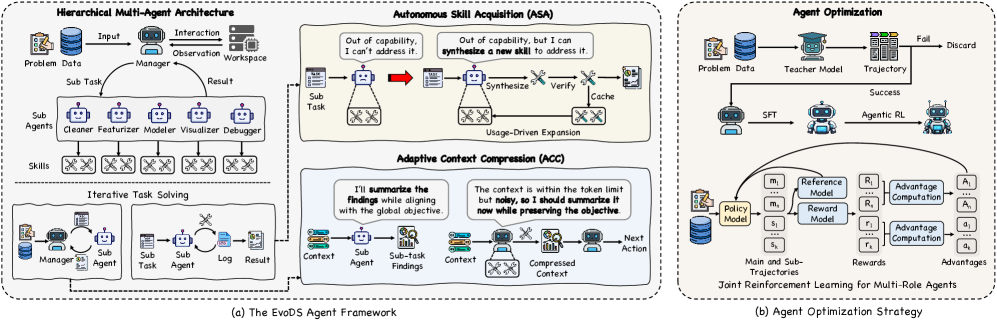
EvoDS: Self-Evolving Autonomous Data Science Agent with Skill Learning and Context Management
A self-evolving data-science agent that acquires reusable executable skills and learns when to compress long-horizon context.
A self-evolving data-science agent that acquires reusable executable skills and learns when to compress long-horizon context.
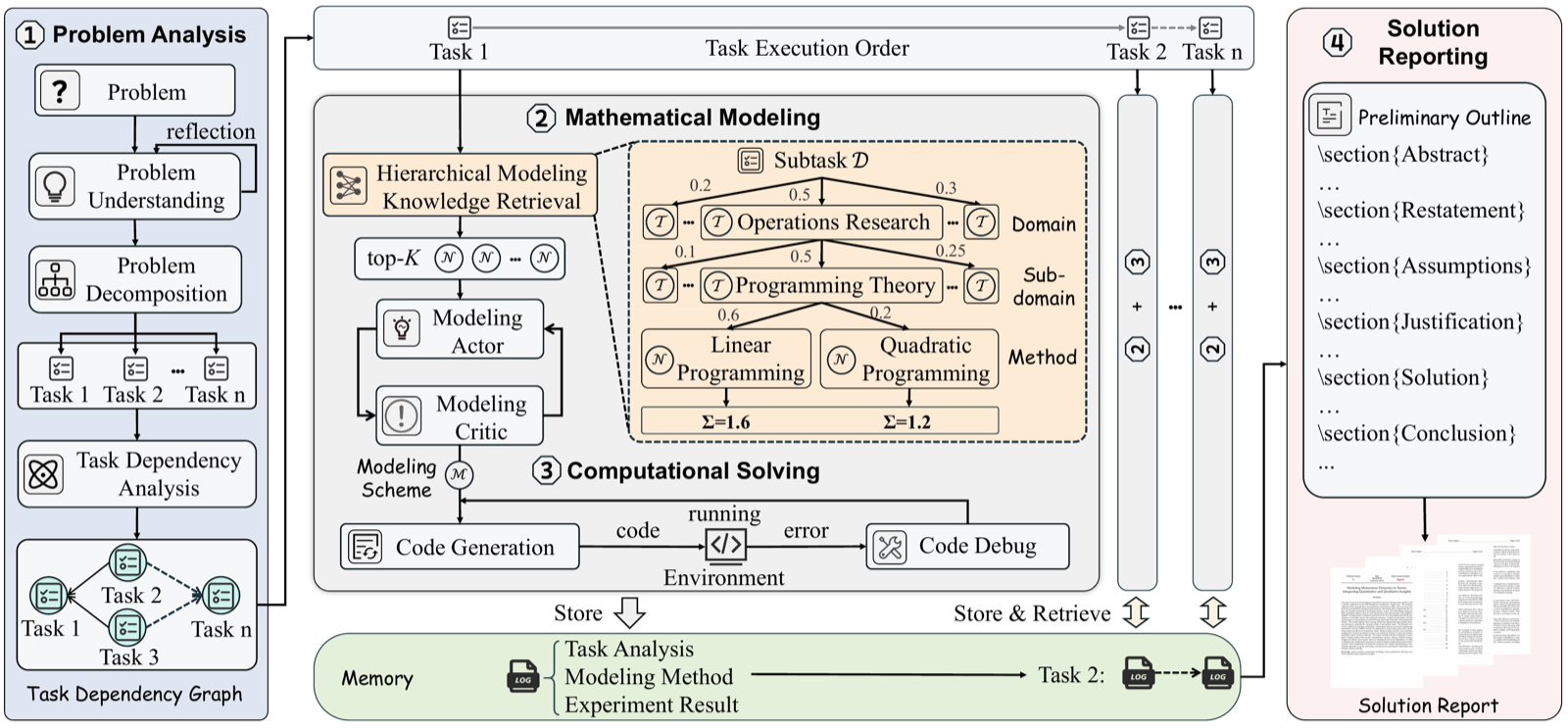
An end-to-end agent that translates open-ended real-world problems into mathematical models, executable solutions, and structured reports.
MoSciBench evaluates whether agents can align heterogeneous scientific data, execute analysis pipelines, and verify hypotheses across modalities and domains.
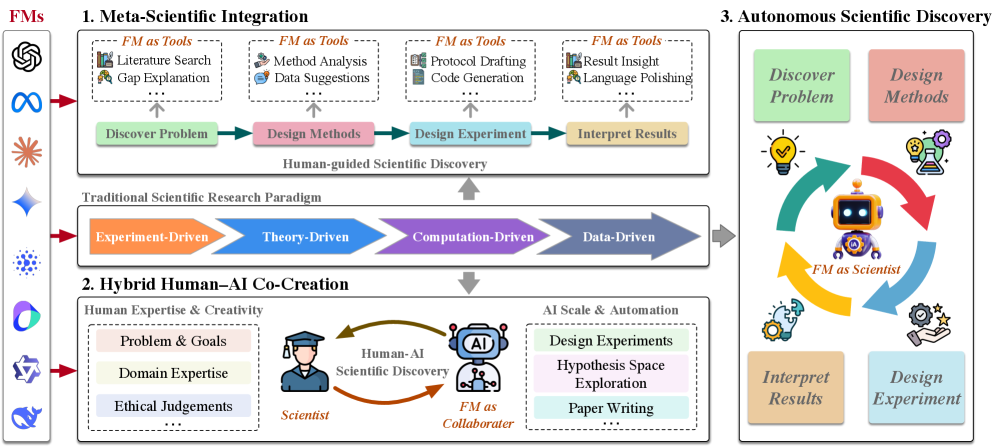
A three-stage view of foundation models evolving from scientific tools, to human-AI collaborators, and ultimately to autonomous discovery agents.
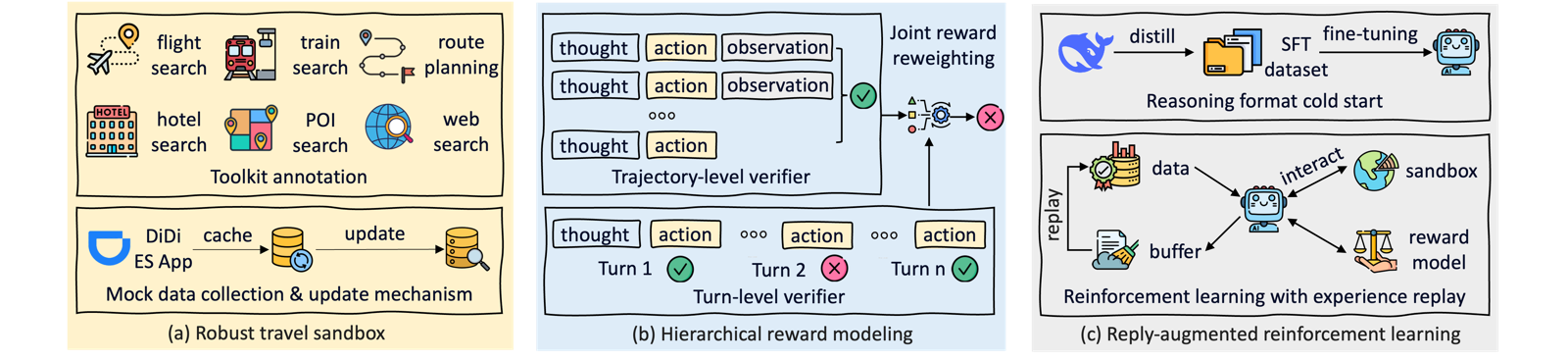
An end-to-end agentic reinforcement-learning framework that trains travel-planning agents through a realistic tool sandbox, hierarchical feedback, and experience replay.
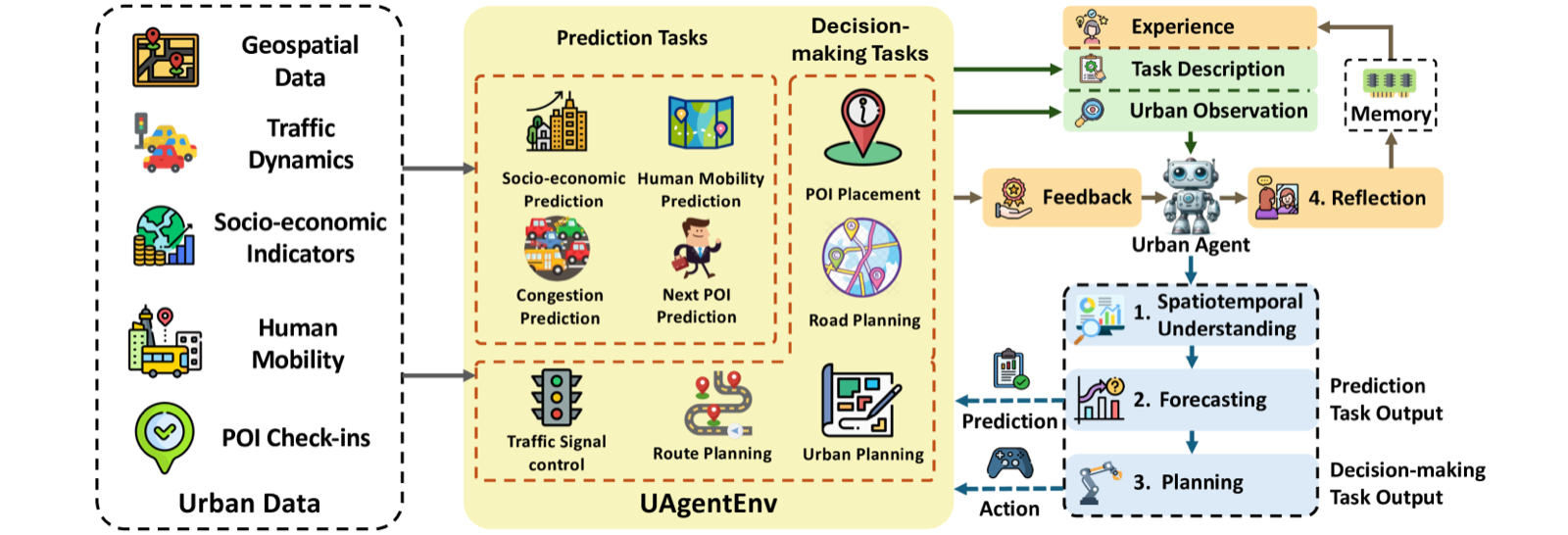
A benchmark and interactive environment that tests how urban agents understand, forecast, plan, and learn from feedback in spatiotemporal worlds.
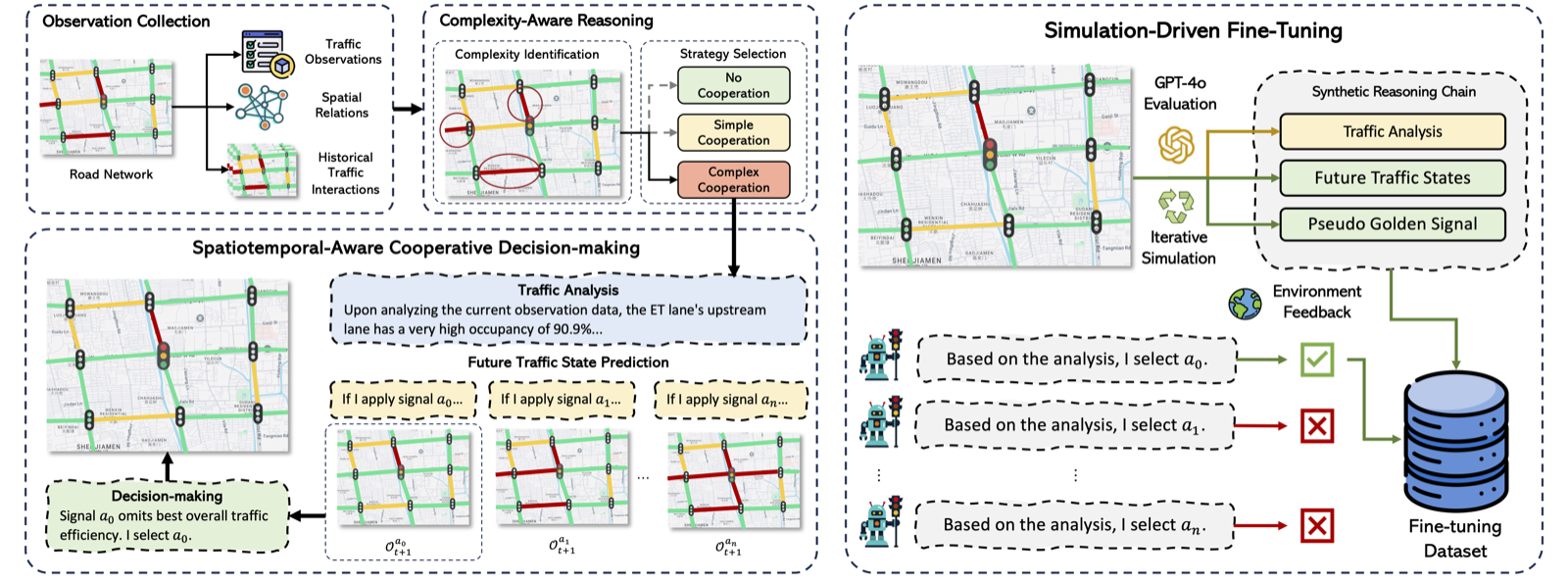
A cooperative LLM-agent system that reasons over network-wide traffic interactions and uses simulation feedback to improve coordinated control.
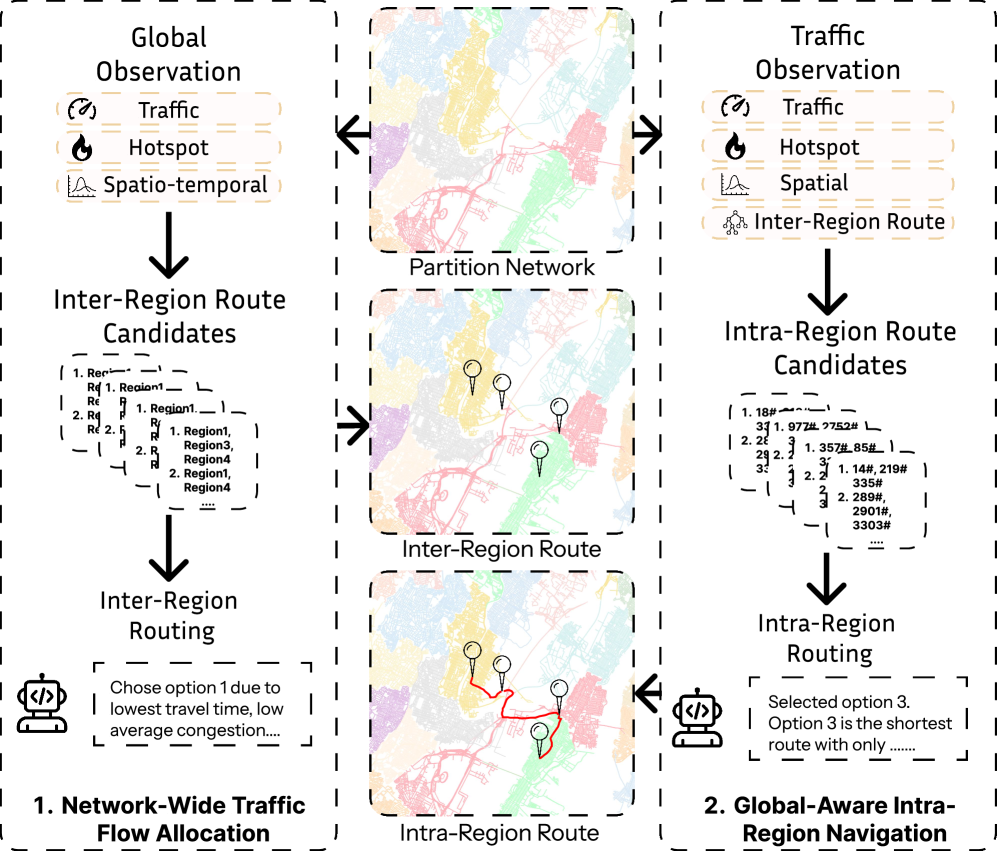
A hierarchical system in which a global agent allocates network-wide traffic flow and local agents make adaptive, congestion-aware routing decisions.
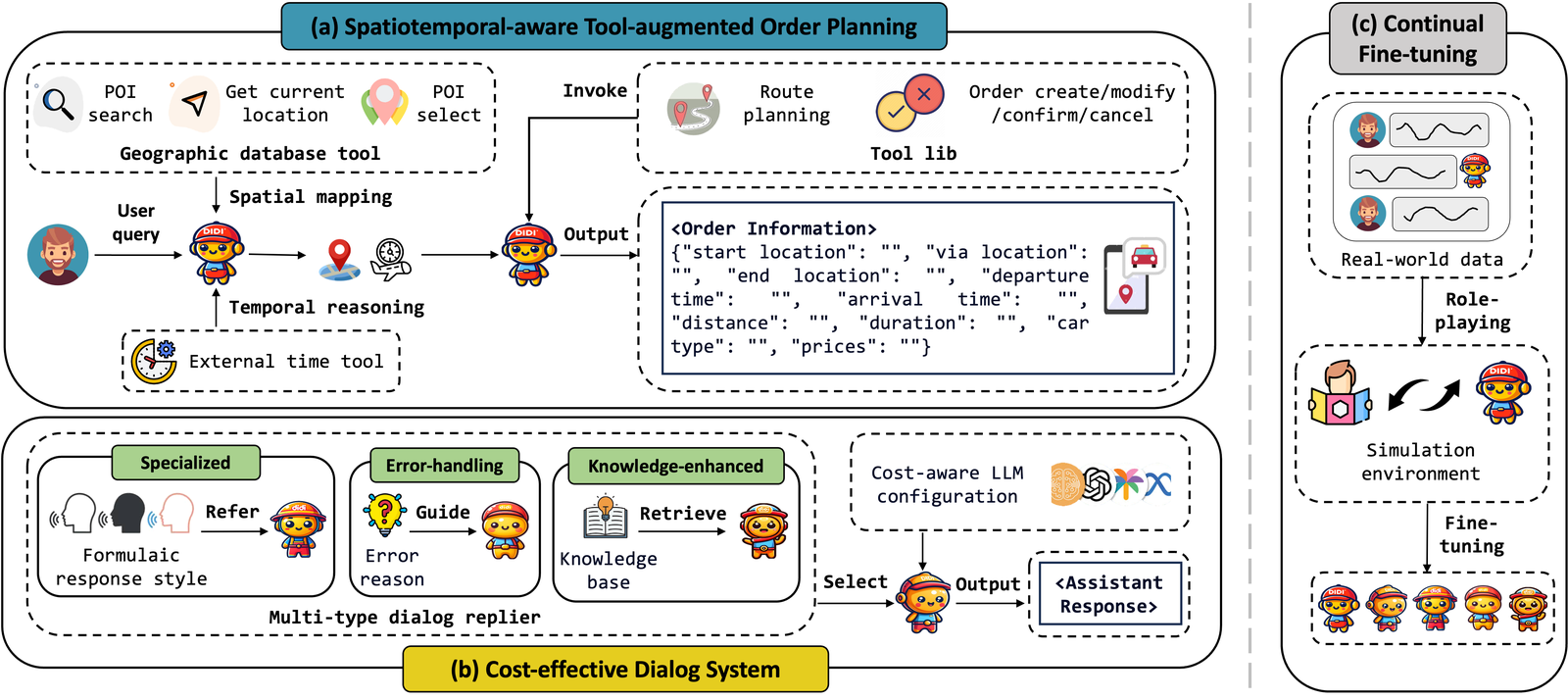
A deployed ride-hailing assistant that combines tool-augmented spatiotemporal order planning, cost-aware dialogue generation, and continual fine-tuning.
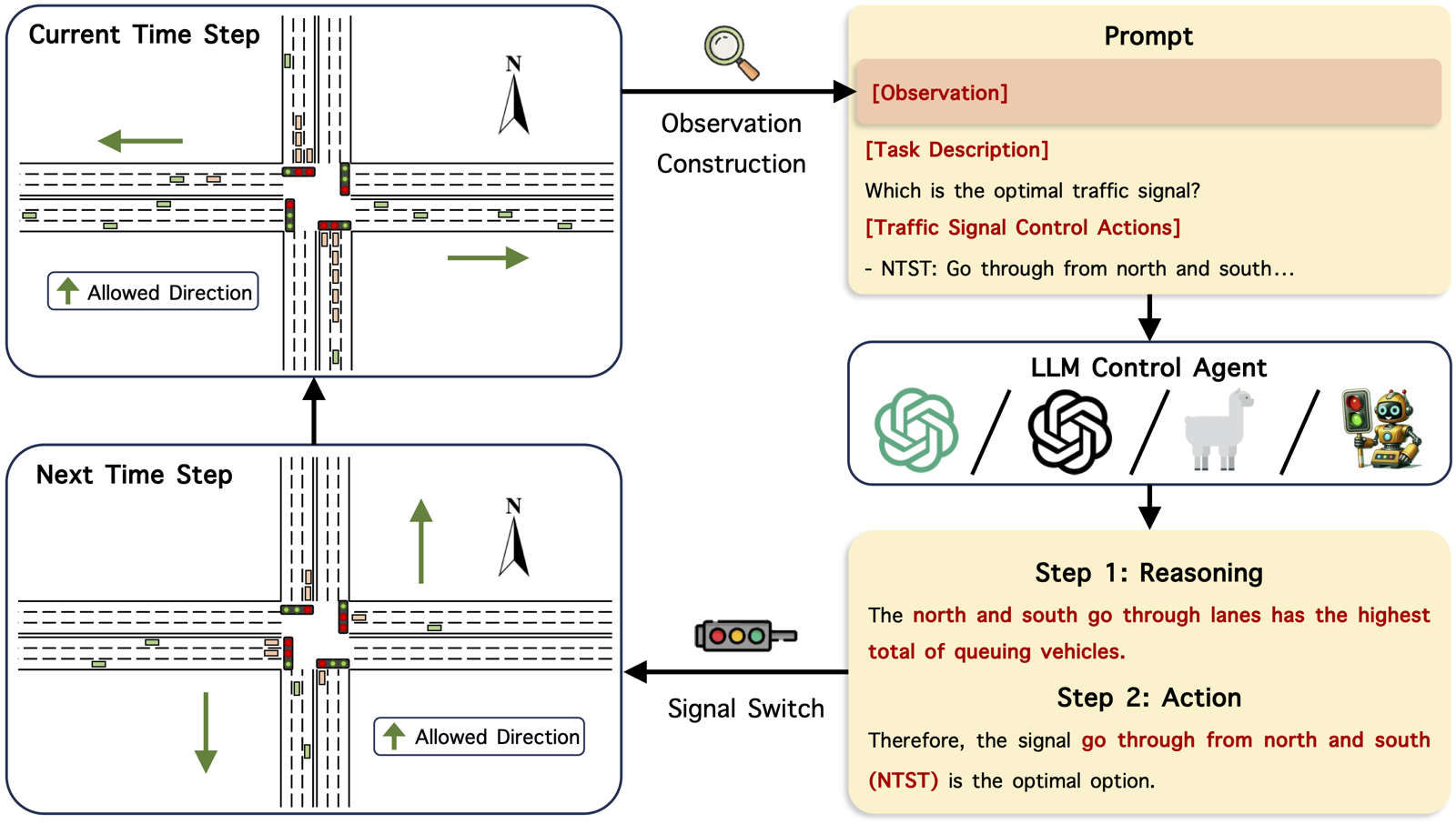
An early demonstration that language models can turn structured traffic observations into interpretable reasoning and closed-loop signal-control actions.
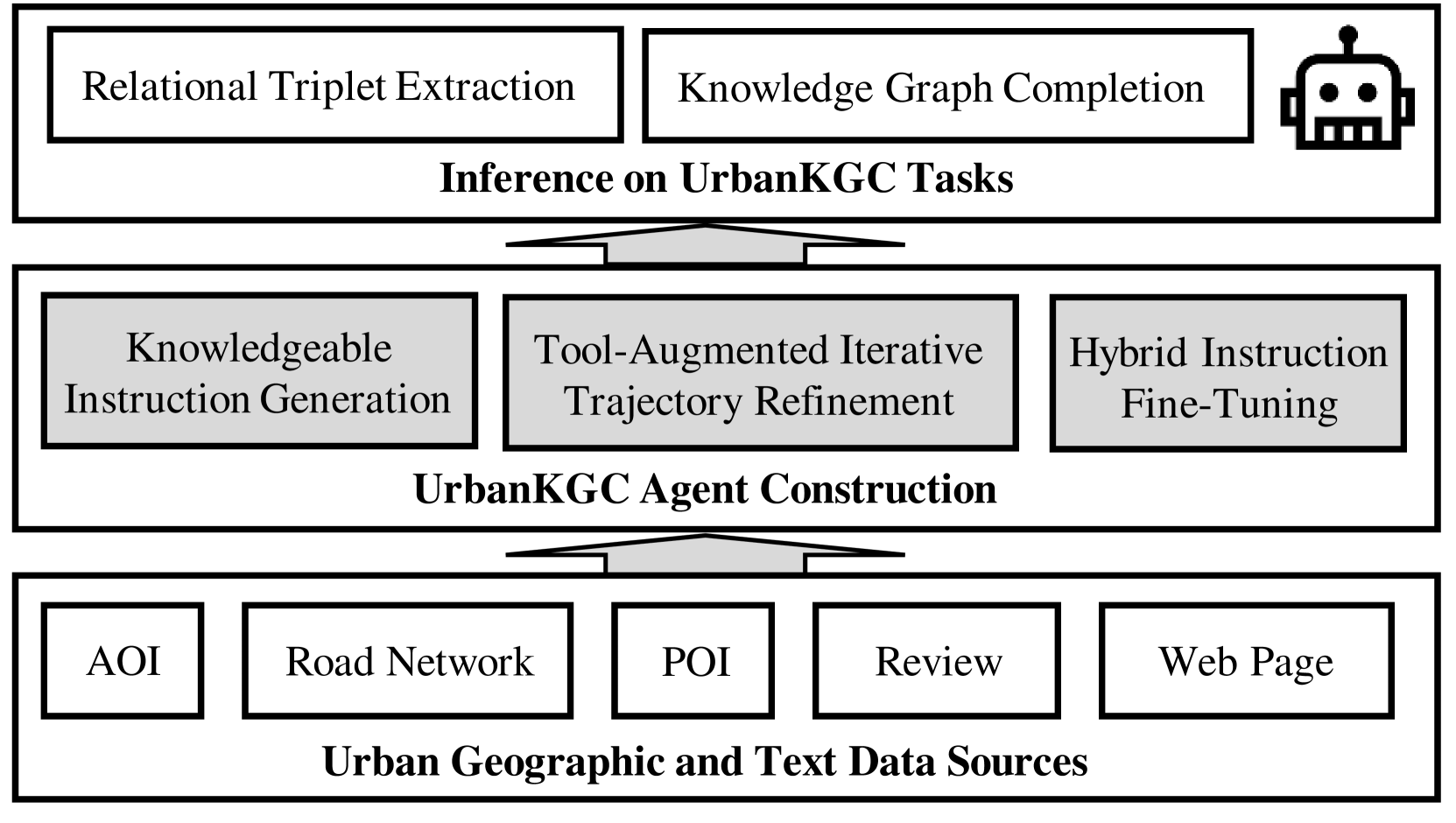
A tool-augmented agent family for urban relation extraction and knowledge-graph completion, built through knowledgeable instructions and iterative trajectory refinement.
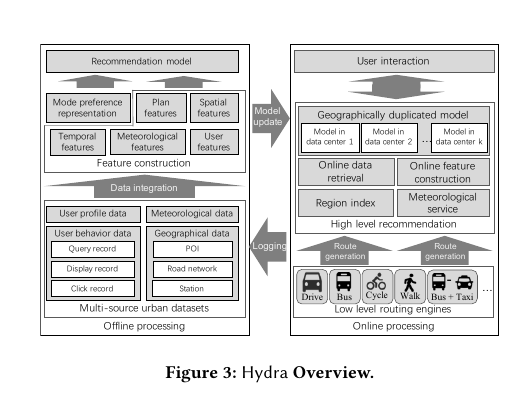
A large-scale decision system that combines user preferences, route plans, and heterogeneous urban context for personalized multi-modal transportation recommendation.
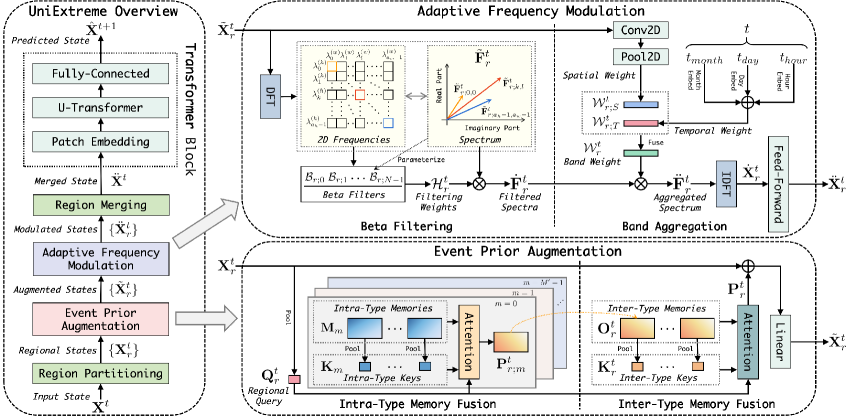
A universal foundation model that learns event-aware representations for transferable forecasting across diverse extreme-weather conditions.
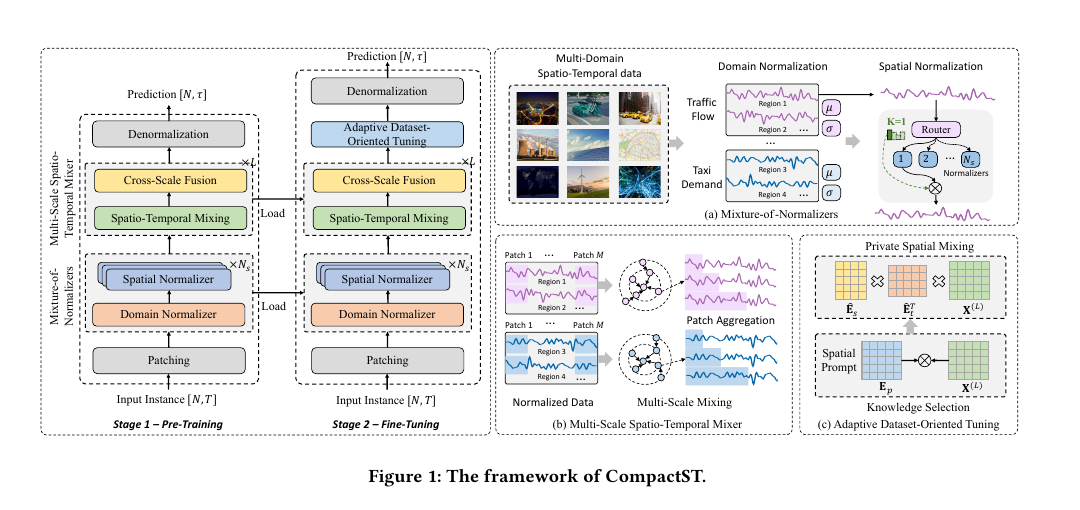
A compact pre-training framework that learns transferable urban dynamics across heterogeneous domains through mixture normalization, multi-scale mixing, and adaptive tuning.
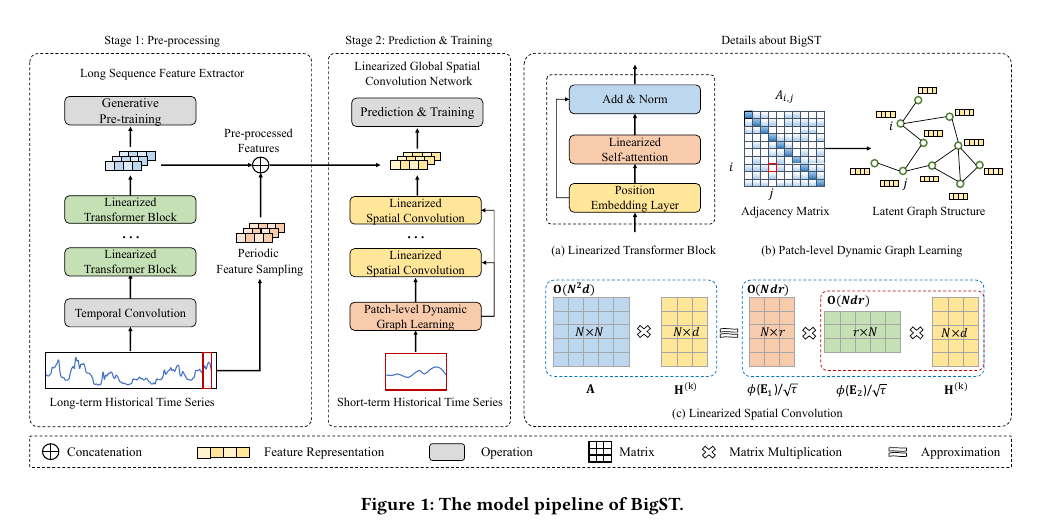
A linear-complexity spatiotemporal graph network that captures long-range dynamics while scaling traffic forecasting to very large road networks.
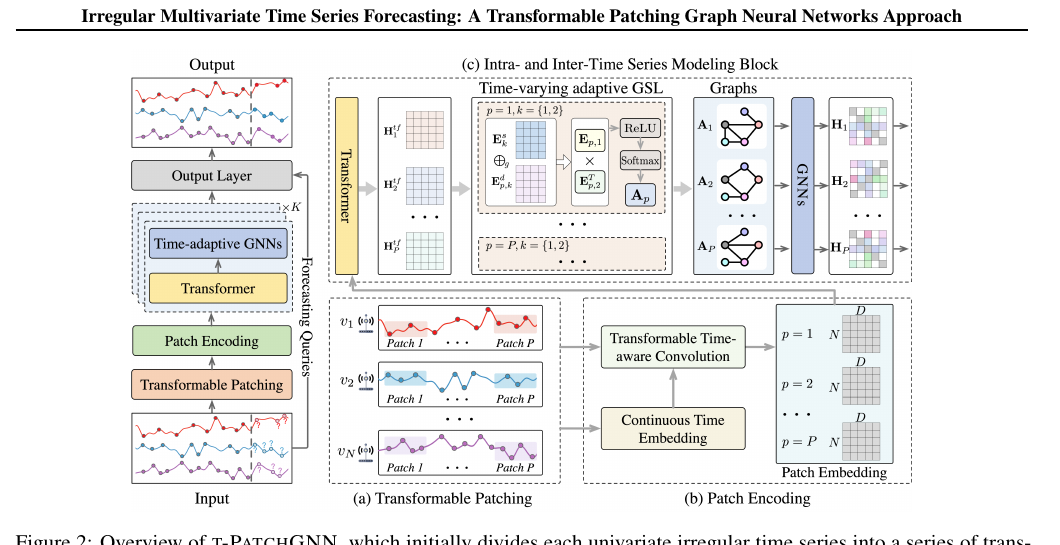
A transformable patching architecture that regularizes irregular observations while learning time-varying dependencies across multivariate scientific time series.
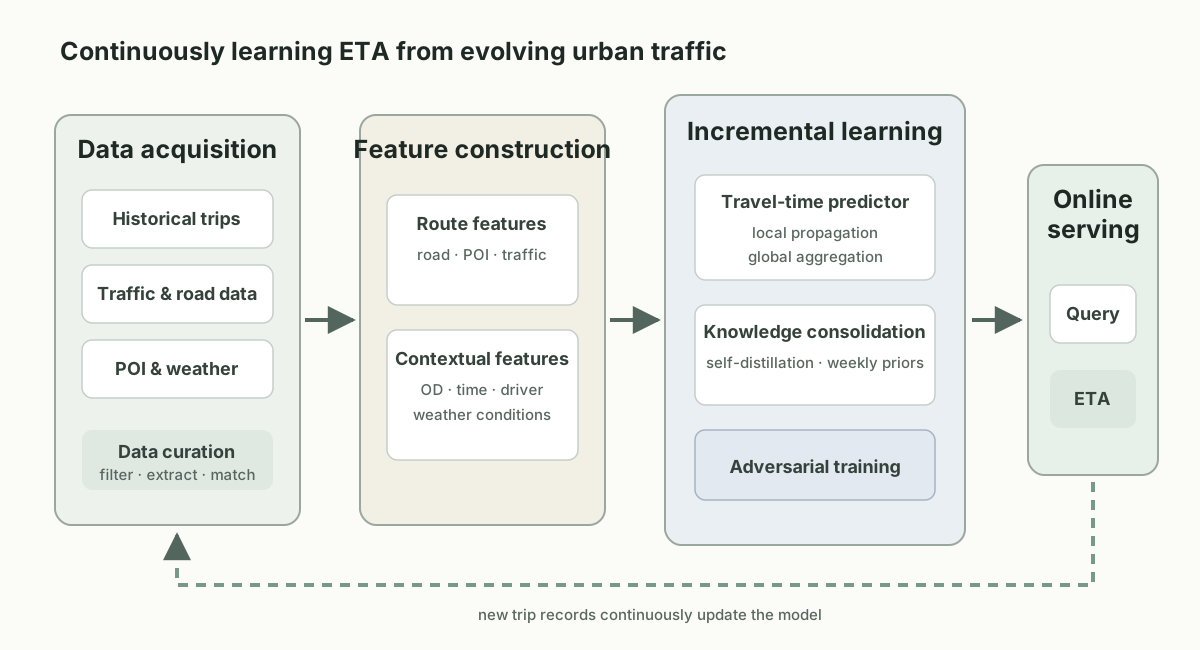
A production-scale ETA framework that continuously adapts to evolving traffic through incremental prediction, knowledge consolidation, and adversarial training.